How to Walk a Reactive Dog in a Busy City Park Without the Anxiety
Reactive dog walks in urban green spaces don't have to be damage limitation. With the right approach, they can actually go well.
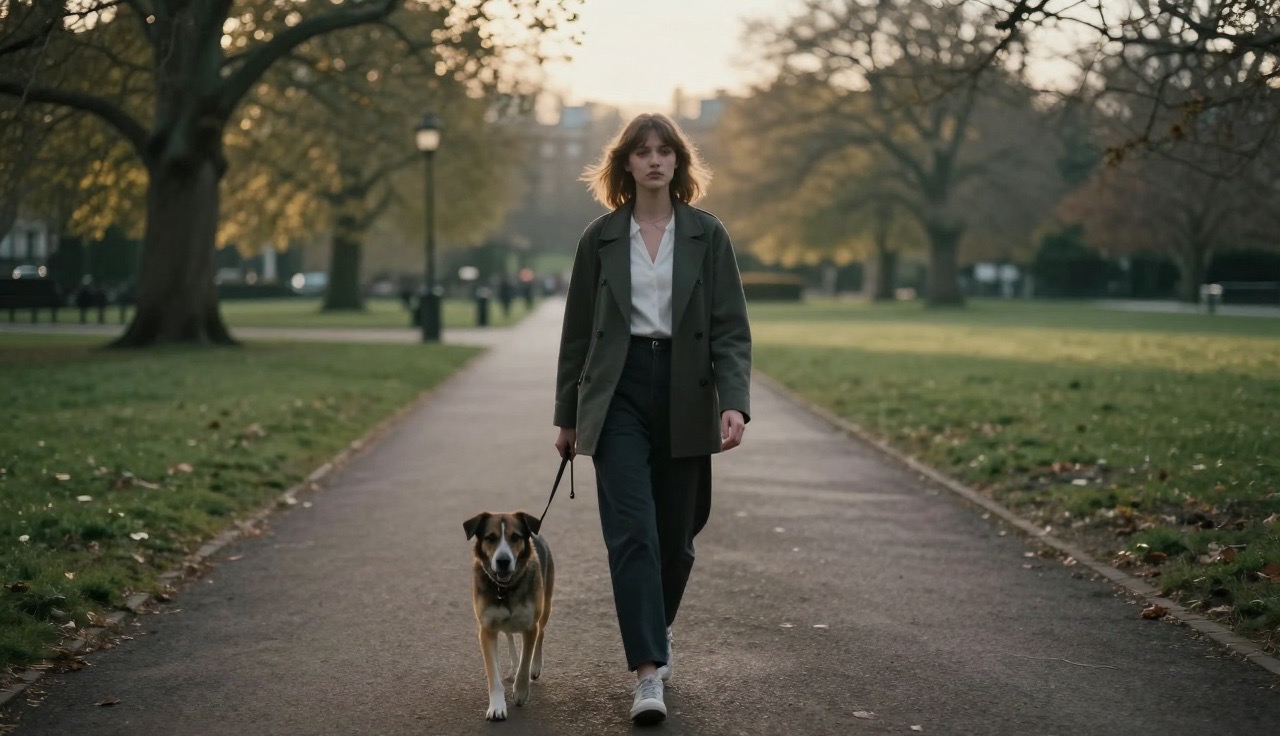
Every owner of a reactive dog knows the specific dread of approaching a busy park gate. You can hear it before you see it — other dogs, voices, the distant thump of a ball. Your hand tightens on the lead. Your dog's ears go up. And both of you arrive already primed, before anything has even happened. Walking a reactive dog in a busy city park is genuinely difficult. It is also learnable. Here is what actually helps.
Understand What Reactive Really Means
Reactivity is not aggression, and treating it as such will work against you. A reactive dog is a dog whose arousal system fires faster and harder than it can manage. Something appears — another dog, a cyclist, a child running — and the dog goes from zero to overwhelmed before either of you has time to think. The barking, lunging, or freezing that follows is a symptom, not the problem.
The problem is arousal — specifically, the gap between how quickly your dog gets there and how much capacity they have to come back down. Everything useful you can do on a walk is aimed at keeping your dog below that threshold, or helping them return to it faster when they tip over.
This matters practically because it changes what you're managing moment-to-moment. You're not trying to stop your dog from reacting to things. You're trying to notice the signs that arousal is building — stiffening, staring, slowing down, a high tail — and act before the point of no return.
Read the Park Before You Enter It
The gate is a decision point. Most owners walk through it on autopilot. Reactive dog owners can't afford to.
Before you enter, stop for thirty seconds and look. Where are the dogs? Are they on leads or off? Is there a cluster of them near the gate, which will put your dog in the middle of the action within seconds of arriving? Is the path ahead wide enough to give you room to manoeuvre, or is it a narrow corridor with no easy out?
Know your exit options before you need them. The path to your left, the gate further down, the gap in the hedge you spotted last week — these are not emergency measures. They're just good navigation. Having them in mind means you can use them calmly and early, rather than scrambling when your dog is already at eight out of ten.
Timing matters here too. A park at 7am on a Tuesday and the same park at 11am on a Saturday are completely different environments. Learning the rhythm of your local park — when it fills up, when it empties, which days are reliably quiet — is some of the most useful work you can do as a reactive dog owner, and it happens before the walk starts.
Use Distance as Your Primary Tool
Distance is the most powerful thing you have on a walk with a reactive dog. More distance means more time. More time means more options. Most of the tactics that help — changing direction, asking for a sit, using a treat to redirect attention — only work if you have enough distance to try them before your dog tips over threshold.
The practical version of this: when you see something your dog might react to, move away from it immediately and decisively. Not tentatively. Not after watching to see how your dog responds. Move first, assess second.
This feels counterintuitive. It can feel like you're being overcautious, or that you're reinforcing avoidance. But maintaining distance isn't the same as fleeing from triggers — it's giving your dog a chance to notice the thing, process it at a manageable arousal level, and move on without going over threshold. That's the experience you're trying to build: I saw that thing, it was fine, we kept walking.

When Things Go Wrong Mid-Walk
They will. Even on a well-timed, well-planned walk, a dog will appear from around a corner, or a cyclist will cut across the path, and your dog will react. This is not failure. It's the nature of walking in a city.
What helps in the moment:
- Don't freeze. Movement is grounding for reactive dogs. Keep walking — even slowly, even in a circle — rather than standing still while your dog is still locked on to whatever triggered them.
- Keep the lead loose. Tension travels down the lead directly into your dog's arousal system. If you're pulling tight, you are physically communicating that there is something to be alarmed about. This is very hard to remember in the moment. It helps to practise it when nothing is happening.
- Get distance, then wait. Once you're far enough away that your dog can stand still without fixating, give them time to come back down before asking them to do anything. A sniff of the grass, a few deep breaths, some gentle movement — arousal drops faster when the dog is moving and using their nose.
The Dogs Trust has thorough guidance on managing reactivity in real-world situations, including what to do when a reactive dog has already gone over threshold. Worth reading in full if you haven't already.
Make the Conditions Work in Your Favour
There is a limit to what good technique can do in genuinely bad conditions. A reactive dog on a narrow, crowded path during the Saturday afternoon rush is going to struggle — not because of anything you're doing wrong, but because the environment doesn't give either of you room to work. Managing the conditions is not giving up. It is the strategy.
This means choosing less busy parks, less busy times, and routes with more space and better visibility. It means knowing which local green spaces tend to have dogs off-lead and which don't. In Hackney, Paws Near Me shows live park density so you can check busyness before you leave home — useful for picking your window, especially on unpredictable weekend mornings.
As your dog builds positive experiences — walks that go below threshold, encounters that are managed well — their baseline arousal tends to drop over time. The park that was impossible six months ago becomes manageable. Progress is slow and non-linear. But it does happen.
What You're Actually Building
Walking a reactive dog in a busy city park is fundamentally a confidence-building exercise — for both of you. Your dog is learning that the world is navigable, that the things that appear don't always mean danger, that you will move them away before it gets too much. You are learning to read your dog earlier, to move with more intention, to plan without rigidity.
Neither of those things happens quickly. But every walk where you manage the conditions well, where you increase the distance before your dog tips over, where you get through the gate and back home without a full reaction — that is not a small win. That is exactly what progress looks like. Much of that work begins before you leave the house, long before the park comes into view.