The Best Times to Walk a Reactive Dog in London Parks (And How to Find Them)
Timing is the most underrated tool in a reactive dog owner's kit. Here's how to find the quiet windows — and use them.
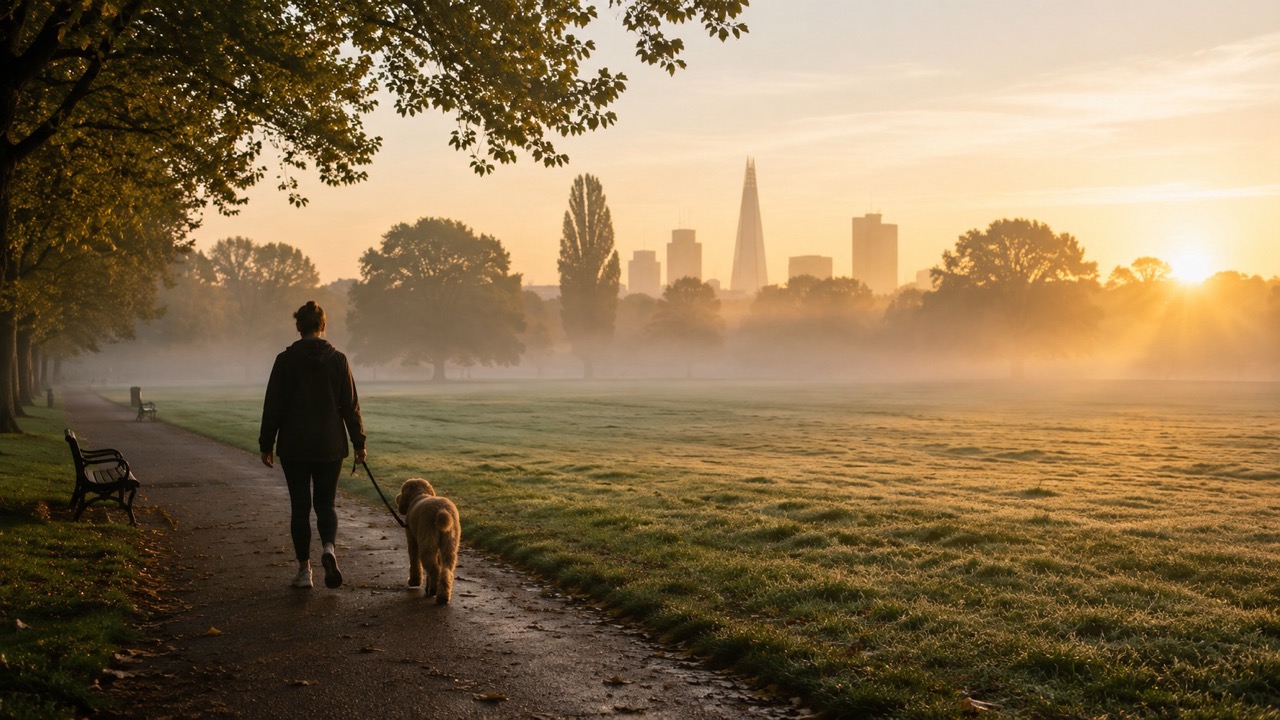
Ask a reactive dog owner what they'd most like to change about their walks and most of them will say the same thing: fewer unexpected dogs. Fewer surprises. More space. The instinct is to think about route — a quieter path, a less-used park, a different part of town. Route matters, but it's the second variable. The first one is time. Getting the timing right on your walks with a reactive dog in London is the single highest-leverage change most owners can make, and it's almost entirely within your control.
Why Timing Matters More Than You Think
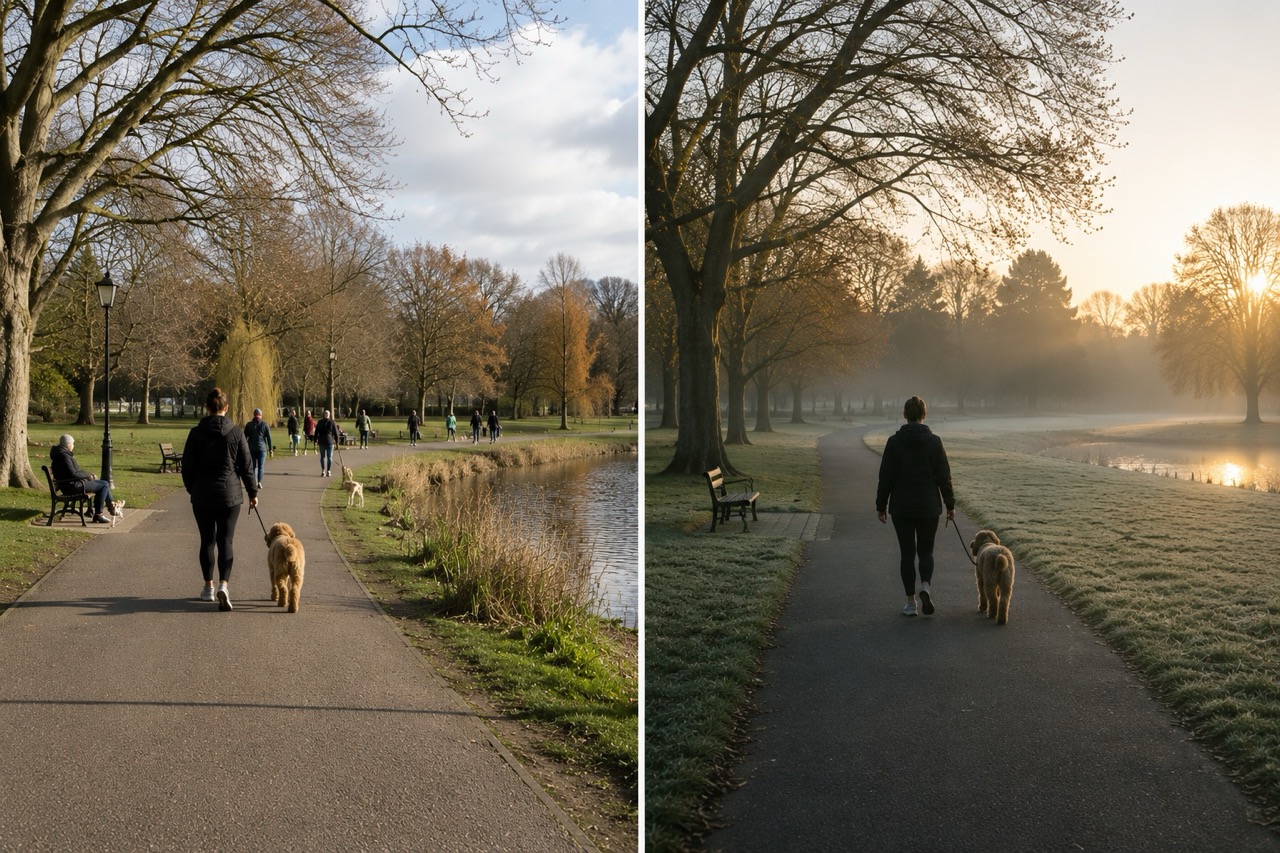
A London park is not a fixed environment. It changes dramatically across the hours of the day, the days of the week, and the seasons. The same patch of Victoria Park that has twelve dogs in it at 8:30am on a Saturday has two at 6:45am on a Tuesday. These are not slightly different walks — they are categorically different experiences for a reactive dog.
The reason timing is so powerful is that it changes your starting conditions. If you arrive at a quiet park, you begin below your dog's threshold. Small things appear — a dog in the distance, a jogger, a cyclist — and your dog notices them, processes them, and moves on. Each one of those micro-encounters is a low-intensity exposure that slowly builds confidence. If you arrive at a busy park, you begin close to threshold before anything has happened. The same small things tip your dog over immediately. The walk becomes reactive management rather than anything that resembles normal walking.
The Blue Cross notes that consistent low-intensity exposure is one of the most effective long-term approaches for reactive dogs. Timing your walks to find the best times to walk a reactive dog in London parks is precisely how you engineer that exposure in a city environment.
London Park Patterns: What the Hours Actually Look Like
There is no universal quiet time — every park has its own rhythm, shaped by the neighbourhood around it, the type of green space it is, and the kind of owners it attracts. But there are some reliable patterns that hold across most of inner and east London.
The early window (before 7:30am weekdays, before 8am weekends) is the most reliably quiet. The owners who walk at this hour tend to be regulars — a smaller, more consistent group, often experienced with their dogs, less likely to let a dog bowl straight up to yours unannounced. Fewer dogs overall, more space between them.
Mid-morning on weekdays (10am–12pm) has a second, underused quiet period. The school-run and commuter rush is over; the lunchtime walkers haven't arrived. Professional dog walkers tend to cluster in this window, which means you might see larger groups of dogs, but they're typically well-managed.
The danger zones are predictable: 8–9am on weekdays (the commuter rush walk), 5–7pm on weekdays (after work), and — most unpredictably — weekend mornings from around 10am onwards, when footfall builds fast and stays high well into the afternoon.
Winter and wet weather thin parks out substantially. A rainy Tuesday afternoon in January is a different proposition entirely from a sunny Saturday in May. If your dog is going through a particularly difficult patch, leaning into the off-peak seasons gives you more low-stress exposure time to work with.
How to Map Your Own Park's Rhythm
General patterns only get you so far. Your local park has its own specific character — which entrance is busiest, whether there's an off-lead area that draws dogs from three streets over, when the dog walking professionals tend to arrive, which days the football pitches fill up and push dogs onto the paths.
The most reliable way to learn this is simple observation over two to three weeks. Walk at different times. Note what you find. You'll quickly develop a mental map of which windows are reliable and which aren't. Most experienced reactive dog owners can tell you their park's patterns to within fifteen minutes — because getting it wrong has taught them.
For London parks, Paws Near Me surfaces live park density before you leave the house, so you can see whether the park is quiet right now rather than guessing based on the day and time. It also builds up a picture of patterns over time, which is useful if you're new to an area or your schedule varies enough that you can't build up the mental model yourself.
Signs a Park Is About to Get Busy
Even within a well-timed walk, conditions change. Knowing when to wrap up and head home is part of working the timing well.
Things to watch for:
- School drop-off finishing. In parks near primary schools, footfall jumps sharply as parents loop back through with the family dog after the 9am drop-off.
- The weekend build. Saturday and Sunday mornings start quiet and accelerate. If you arrive at 8am and the park has four dogs in it, assume it will have twenty-plus by 10am. Leave before the build, not during it.
- Good weather after rain. A dry Saturday after a rainy week draws every dog owner who has been cooped up indoors. These are some of the busiest park days of the year and they're easy to miss if you're going by day of the week rather than conditions.
- Events and organised activities. Parkrun routes, outdoor fitness classes, organised dog walks — these create sudden density spikes that don't follow the usual pattern. Most parks publish their events; worth a quick check if your park hosts them.
Fitting It Around Real Life
The honest complication is that most people can't walk their dog at 6:45am every day. Work, children, and basic human biology all get in the way. Timing-based management works best as a guiding principle rather than a rigid rule: aim for the quieter windows when you can, and when you can't, prepare accordingly.
On a busy-timing walk — a post-work 6pm trip to a park you know will be hectic — that preparation means a slightly different route, higher-value treats, a shorter walk that you end before the dog gets too stimulated, and a mental readiness to increase distance and exit early if needed. That kind of pre-walk preparation does a significant amount of the heavy lifting regardless of when you leave.
The goal isn't to design a life around your dog's reactivity forever. It's to create enough low-stress exposure, consistently enough, that your dog's baseline arousal gradually drops and the difficult windows become more manageable. Timing is how you engineer that. Most walks, most of the time, in the conditions that give you both room to breathe.